
















Enver Hasani: If the President Is Elected After March 5, It Is a Violation of the Constitution; Albulena Haxhiu Is Being Aimed to Become Acting President
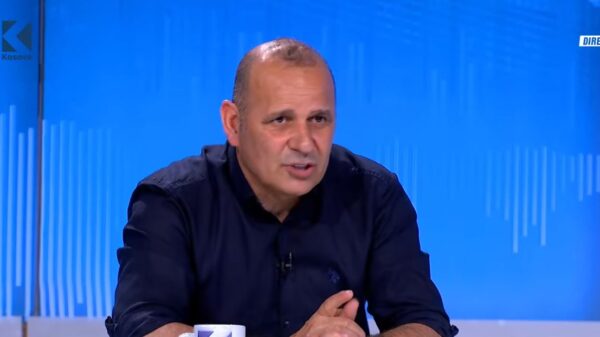
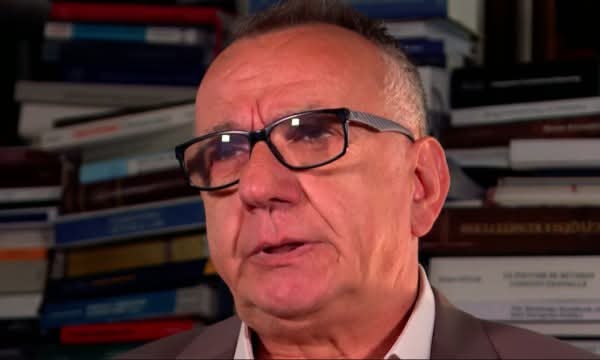
Professor and former President of the Constitutional Court, Enver Hasani, has said that if the President is elected after March 5, this would constitute a flagrant violation of the Constitution.
In an interview for the newspaper Nacionale, Hasani stated that it is true that the country does not automatically go to elections if the 30-day deadline for electing the President is violated.
However, he emphasized that any election of the President after March 5 would be unconstitutional.
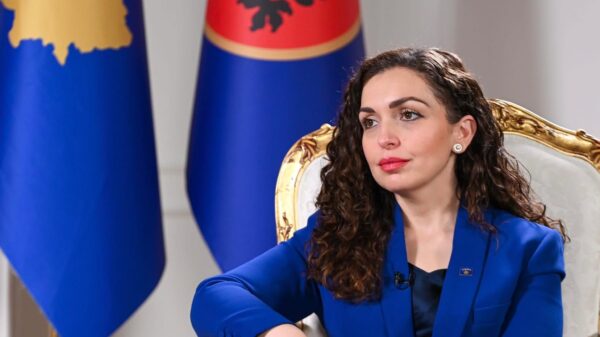
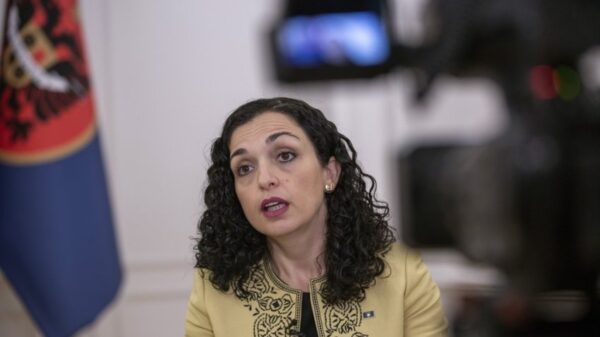
“Such an election would certainly be unconstitutional, because it directly contradicts the clear constitutional provision that mandates the election of the President 30 days before the expiration of the current President’s mandate. However, if such a decision is not challenged in the Constitutional Court, then the new President, elected after March 5, assumes office the day after the mandate of Ms. Vjosa Osmani expires,” Hasani said.
Hasani further stressed that the country goes to elections automatically when none of the candidates receives 62 votes, provided that 80 deputies participated in the voting.
He described the idea of Vetëvendosje (LVV) to suspend the process and seek an interim measure from the Constitutional Court as an abuse. According to him, the aim is for Haxhiu to become Acting President.
“It is a clear sign of an intention to abuse and violate the constitutional order, as LVV has done throughout last year and in the majority of its political activity. The deadline has not yet been violated. The President must be elected! There is no need to violate Kosovo’s Constitution through destructive reinterpretations, which are always possible,” Hasani said.
Professor Hasani, there was a claim by former Deputy Minister Blerim Sallahu, who said that the country does not automatically go to elections if the President is not elected due to deputies not remaining in the session hall. Can you elaborate on this situation?
HASANI: What Mr. Sallahu reportedly said is correct. According to the Constitution, the country does not go to elections if, for any reason, Assembly of Kosovo enters the grey zone of the thirty days before the expiration of the mandate of the current President, Vjosa Osmani. The only case in this phase in which the country could go to elections would be if there were absolute consensus for such a step, but that would have to be done by dissolving the Assembly of Kosovo with two-thirds of the votes. So again, not automatically as a consequence of violating the thirty-day deadline before the expiration of the current President’s mandate.
In which cases does the country go to elections in relation to the situation of the President?
HASANI: In any situation where none of the two or more candidates wins the absolute majority of 62 votes, provided that in the first two rounds of voting 80 deputies have participated.
How do you comment on Sallahu’s idea that the process should be suspended if deputies do not remain in the hall and that clarification or interpretation should be sought from the Constitutional Court?
HASANI: It is a clear sign of an intention to abuse and violate the constitutional order, as LVV has done throughout last year and in most of its political activity. The deadline has not yet been violated. The President must be elected! There is no need to violate Kosovo’s Constitution through destructive reinterpretations, which are always possible. In the constitutional practice of European countries, there exists the major doctrine of loyalty to the Constitution, which must be implemented by all. Unfortunately, LVV has a dark history in this regard.
If the President is elected after March 5, is such a decision automatically unconstitutional?
Such an election would certainly be unconstitutional, because it directly contradicts the clear constitutional provision that orders the election of the President 30 days before the expiration of the current President’s mandate. However, if such a decision is not challenged before the Constitutional Court, then the new President elected after March 5 assumes office the day after Ms. Vjosa Osmani’s mandate expires.
Does this mean that deputies who do not remain in the hall during the presidential vote are violating the Constitution?
HASANI: A violation and abuse of the Constitution occurs when the party that has the opportunity to propose two or more candidates, alone or in coalition with others, fails to do so. Without this circumstance occurring, it cannot be known whether deputies will participate in the vote or not. As is known, the Assembly has a quorum when 61 deputies are present.
Do you assess that another political crisis is being sought, by turning the Constitutional Court into an address for further interpretations?
HASANI: Without any doubt, the aim is to exceed the thirty-day deadline and assume the position of head of state through the Acting President, who according to the Constitution and the Constitutional Court’s judgment in the Pacolli case belongs to Ms. Albulena Haxhiu.